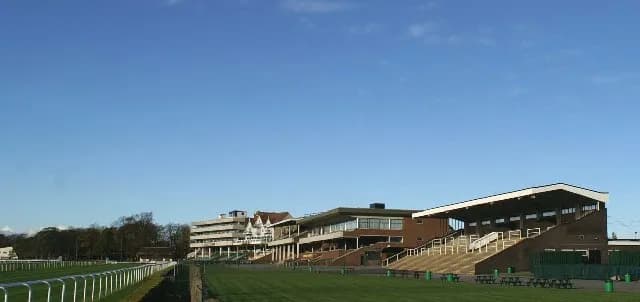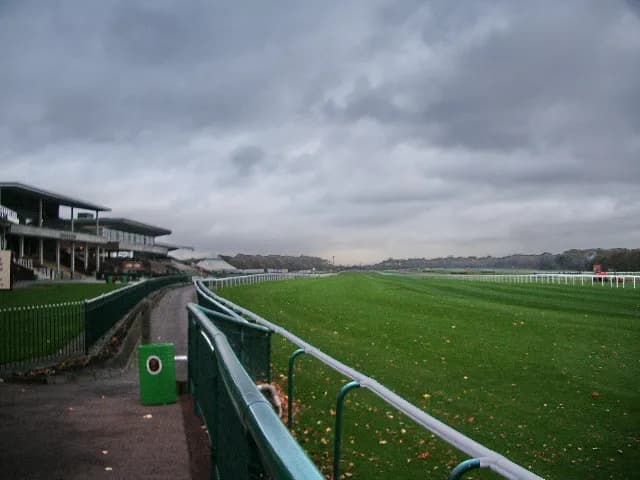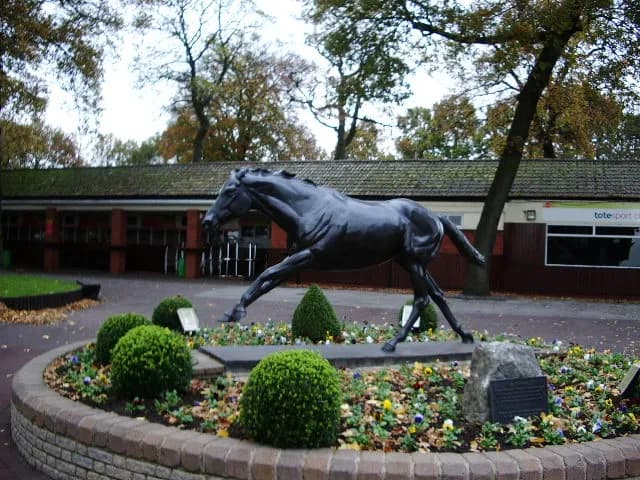
Head south-west from Bolton this October and one of the North West's best-known racecourses is preparing to bring its Flat season to an end.
Haydock Park stages its final Flat meeting of 2026 on Friday 16th October, closing a season that has included the Temple Stakes, Old Newton Cup and Sprint Cup.
Nine days later, the focus switches to Aintree for Halloween Family Day on Sunday 25th October, when the Grade 2 Old Roan Chase brings some of the country's leading jumpers back into action.
For Bolton racegoers, it is a neat change of seasons.
October begins with the last of the Flat and ends with the jump campaign gathering pace.
One last Flat afternoon at Haydock
Haydock's Flat Finale takes place on Friday 16th October.
Gates are currently scheduled to open at 12.25pm, with the first race at 1.55pm and the last at 5.25pm.
It is the final chance this year to see Flat racing at a course that has staged some of the biggest races of the northern summer.
After that, Haydock turns its attention towards jump racing.
The next major date is Betfair Chase Day on Saturday 21st November, when some of Britain's leading staying chasers traditionally begin campaigns aimed at the biggest races of the winter.
That change from Flat horses in October to three-mile chasers in November is part of what makes Haydock unusual.
It is genuinely a racecourse for all seasons.
Racing here goes back long before Haydock Park
The modern course opened in 1899, but the area's racing history goes back much further.
Horse racing took place on Newton Common, around Newton-le-Willows, from at least the seventeenth century.
The meetings were staged on a large area of common land known as Golborne Heath and were originally closely associated with the local hunting community.
By the nineteenth century, they had developed into much bigger public occasions.
The race that provides the clearest link between the old course and modern Haydock is the Old Newton Cup.
Its roots lie in the Newton Gold Cup, first staged in 1807 over four miles.
Young Chariot won the inaugural running.
Racing on the common was suspended after 1816 before being revived in 1825 by Thomas Legh of Lyme Park, who wanted to establish Newton as one of the leading race meetings in the North.
A new grandstand was built and crowds returned.
For much of the nineteenth century, race week became one of the major events in Newton and the surrounding industrial towns.
From Newton Common to Haydock
By the end of the century, the old course was beginning to show its age.
The final Newton Cup on the common was staged in 1898.
First Foot won under jockey Freddie Lane.
The following year racing transferred to the newly created Haydock Park.
The Newton Cup moved with it.
Its first Haydock winner was Arsenal, who won by 12 lengths.
The race eventually became known as the Old Newton Cup and survives today as the strongest direct connection between the modern racecourse and the meetings held on Newton Common generations earlier.
Haydock Park has since grown into one of the North West's major sporting venues.
It stages both Flat and National Hunt racing and remains home to some nationally important contests.
A course built for a proper gallop
Haydock has a reputation as a relatively fair racecourse.
Its Flat track is left-handed, broad and galloping, with sweeping turns and a long home straight.
That matters.
At some tighter courses, a horse can lose a race because it becomes trapped behind runners or struggles around sharp bends.
Haydock generally gives horses more room.
Big, long-striding runners can build momentum, while the long straight gives jockeys time to make their challenge.
There is also a separate straight course used for sprint races.
Ground conditions can change the picture considerably, particularly in October.
Haydock can become testing after sustained rain, and horses that enjoy softer ground often become much more interesting towards the end of the season.
By the time the Flat Finale arrives on 16th October, some runners will have been racing since spring.
Others may have been deliberately saved for autumn ground.
That makes checking the going worthwhile before trying to make sense of the day's races.
An easier place to try racing for the first time
A quieter autumn afternoon can also be a good way to experience Haydock without the crowds associated with its biggest Saturdays.
There is time to explore.
The parade ring is worth visiting before each race, where the horses walk around before the jockeys mount.
Then follow them towards the course and find somewhere near the rail for the finish.
Seeing a field of horses travelling at full speed from ground level is a very different experience from watching a race on television.
There is no need to understand every line of the racecard either.
Nor is there any obligation to bet.
If you do decide to have a bet, setting a limit before the first race and treating it as part of the cost of the afternoon keeps things simple.
For an October meeting, a decent coat will probably prove more useful than worrying too much about dress codes.
Then Aintree takes over
Nine days after Haydock closes its Flat season, racing continues at one of the most famous courses in the world.
Aintree stages Halloween Family Day on Sunday 25th October.
The centrepiece is the Grade 2 Old Roan Chase, run over around two and a half miles on the Mildmay Course.
The race has become an important early-season target for established chasers returning from their summer break.
Previous winners include Kauto Star, Frodon and Monet's Garden.
Monet's Garden won the race three times.
This year's Old Roan is currently scheduled for 3.00pm, with racing beginning at 12.40pm.
Pony racing starts earlier in the day.
The meeting also has a deliberately family-focused programme, with Halloween activities including crafts and face painting.
Under-18s can attend free when accompanied by an adult, subject to the racecourse's admission conditions.
Two very different kinds of racing
Haydock on 16th October and Aintree on 25th October offer completely different experiences.
Haydock's meeting is the end of something.
The Flat season is winding down, horses have months of racing behind them and the autumn weather is beginning to take over.
Aintree feels more like a beginning.
Jump horses are returning from summer breaks and trainers are starting to find out where they stand ahead of the major winter meetings.
The Old Roan can provide an early clue about horses that may later appear at Cheltenham, Kempton or back at Aintree in the spring.
For someone new to racing, going to both would also make the difference between Flat and jump racing immediately obvious.
Getting to Haydock from Bolton
Haydock Park is straightforward to reach by road from Bolton.
The course sits close to the East Lancashire Road and junction 23 of the M6, between Wigan, Warrington and St Helens.
For anyone travelling by rail, Newton-le-Willows is the most useful station.
Haydock currently operates a dedicated raceday shuttle bus between Newton-le-Willows station and the racecourse on regular fixtures.
The service costs £3 each way or £5 return.
That makes public transport considerably simpler than it has sometimes been in the past.
Newton-le-Willows and the railway story
There is plenty of history around the racecourse itself.
Newton-le-Willows grew alongside the development of Britain's railways.
The Liverpool and Manchester Railway opened in 1830 and ran through the area on its way between the two cities.
Close to Earlestown, the Sankey Viaduct remains one of the great surviving structures from the early railway age.
Near Parkside, a memorial marks another famous moment.
On the railway's opening day, 15th September 1830, Liverpool MP William Huskisson was struck by George Stephenson's locomotive Rocket.
He died from his injuries later that day and became one of the best-known early casualties of the railway age.
It is a strange historical coincidence that an area already associated with horse racing would become part of the transport revolution that eventually allowed racegoers to travel around Britain in numbers unimaginable to the people attending those early meetings on Newton Common.
Back in Bolton
There is plenty of sporting and industrial history closer to home too.
Bolton Museum and Art Gallery on Le Mans Crescent covers the town's development alongside collections ranging from archaeology to natural history.
Hall i' th' Wood tells another important local story.
The sixteenth-century building was once home to Samuel Crompton, who developed his spinning mule there during the Industrial Revolution.
Those stories of invention, industry and transport are part of the same wider North West history that surrounded the growth of racing at Newton and Haydock.
But October offers a simpler reason to make the journey.
Haydock stages its final Flat meeting of 2026 on Friday 16th October.
Then, on Sunday 25th October, Aintree's Halloween Family Day and Old Roan Chase signal that the jump season is properly under way.
For Bolton racegoers, one season is ending just as another begins.
Check the Haydock Park and Aintree racecourse websites before travelling for the latest race times, tickets, transport information and ground conditions.